Introduction
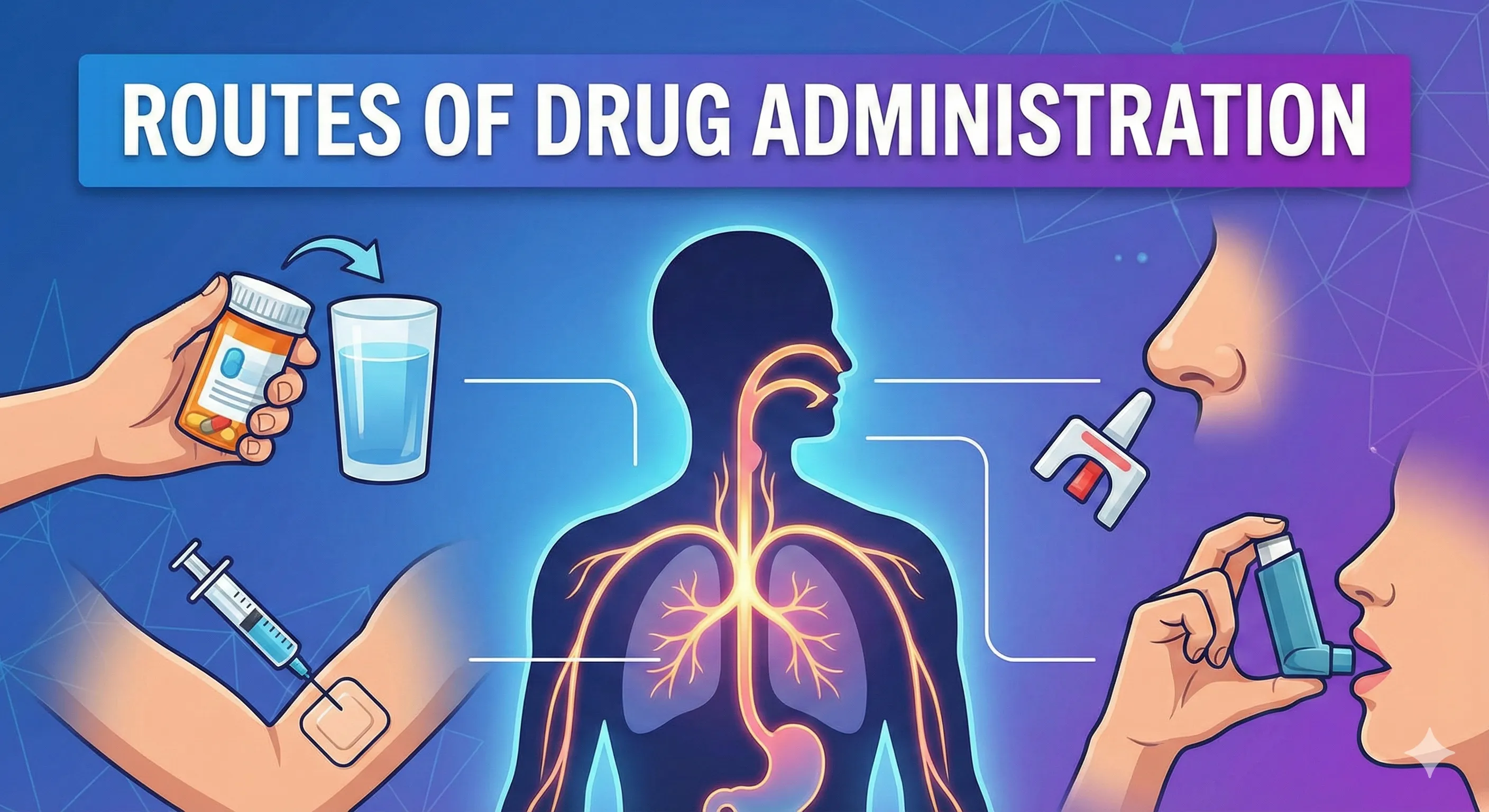
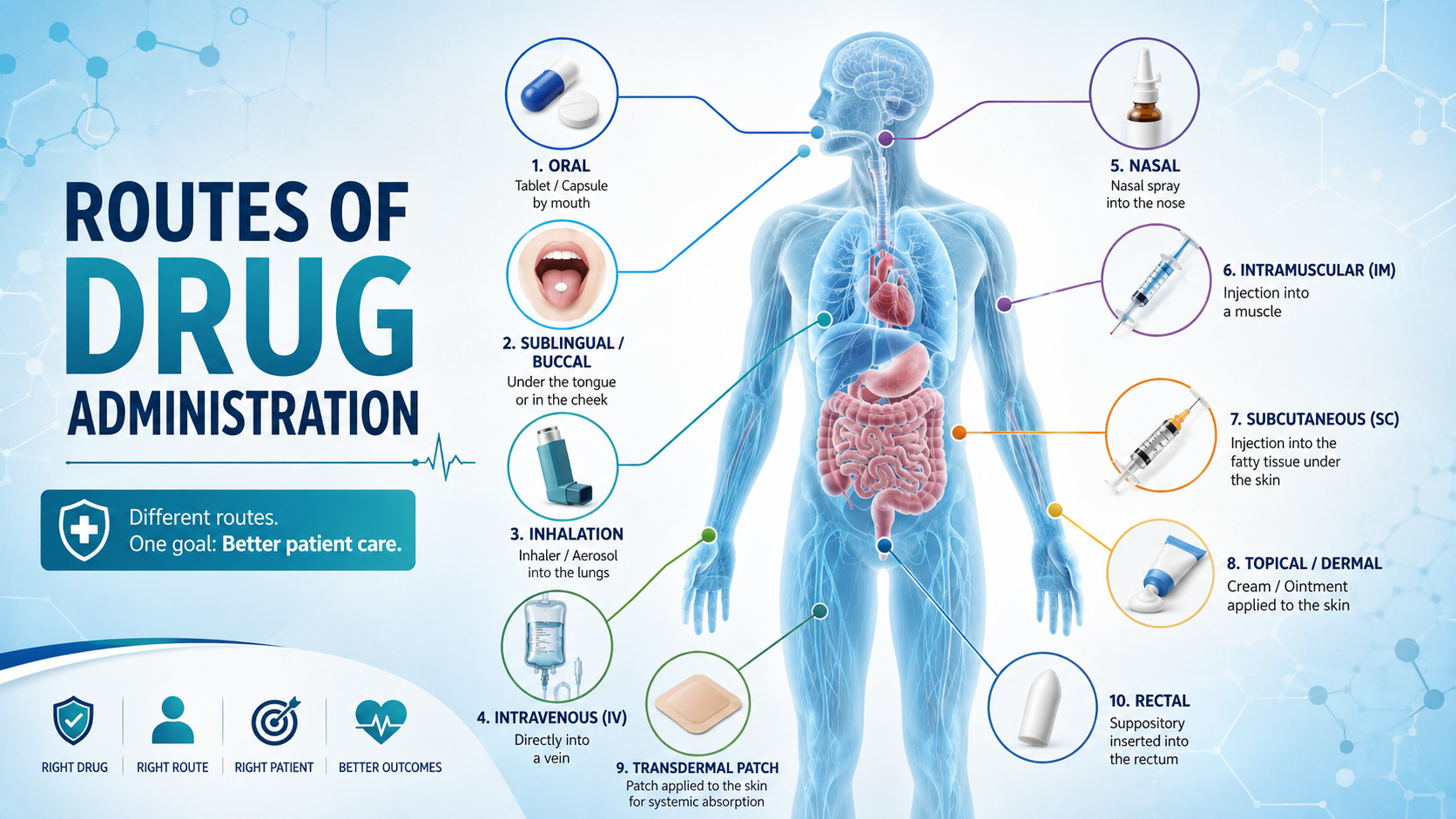
Administering medication is a fundamental aspect of healthcare, and the route by which a drug is delivered can significantly influence its efficacy, safety, and patient adherence. The choice of route depends on factors such as the drug's properties, the desired speed of onset, the condition being treated, and patient-specific considerations. This article provides a comprehensive overview of the common routes of drug administration, highlighting the advantages and disadvantages of each to aid healthcare professionals and students in making informed decisions.
Enteral Routes
Enteral routes involve the absorption of drugs through the gastrointestinal (GI) tract. These are the most common and convenient methods for many medications.
Oral (PO)
The oral route is the most frequently used, involving swallowing tablets, capsules, liquids, or suspensions.
Advantages:
- Convenient and painless, promoting patient compliance.
- Cost-effective and suitable for self-administration.
- No need for sterile equipment, reducing infection risk.
- Ideal for chronic therapy requiring repeated dosing.
Disadvantages:
- Slow onset of action due to absorption time.
- First-pass metabolism in the liver reduces bioavailability.
- Irritation of the GI tract may cause nausea or vomiting.
- Not suitable for unconscious, vomiting, or uncooperative patients.
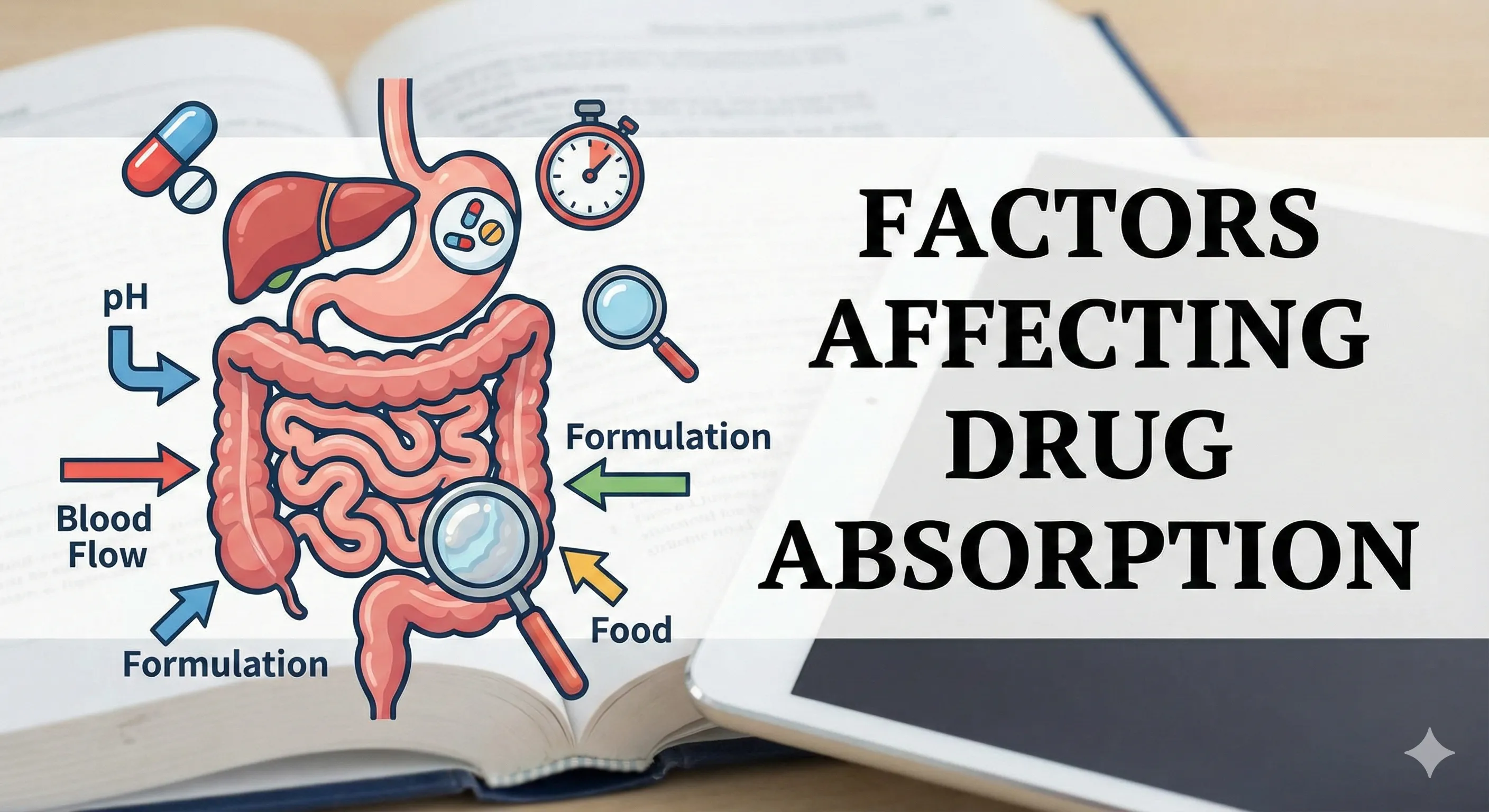
- Food interactions and GI conditions can alter absorption.
Sublingual (SL)
Sublingual administration places the drug under the tongue, where it dissolves and is absorbed into the systemic circulation.
Advantages:
- Rapid absorption and onset of action.
- Bypasses first-pass metabolism, increasing bioavailability.
- Convenient for drugs that are inactivated by gastric acid.
Disadvantages:
- Limited to drugs that are lipid-soluble and potent.
- May cause local irritation.
- Not suitable for large doses or drugs with unpleasant taste.
Rectal (PR)
Rectal administration delivers drugs via suppositories or enemas, allowing absorption through the rectal mucosa.
Advantages:
- Useful when oral route is contraindicated (e.g., vomiting).
- Partially bypasses hepatic first-pass metabolism.
- Suitable for patients with swallowing difficulties.
Disadvantages:
- Absorption can be erratic and incomplete.
- May cause rectal irritation or discomfort.
- Not socially acceptable for many patients.
Parenteral Routes
Parenteral routes bypass the GI tract, delivering drugs directly into the bloodstream or tissues. They are essential for rapid action and when oral administration is not possible.
Intravenous (IV)
IV injection or infusion delivers the drug directly into a vein.
Advantages:
- Immediate onset of action, ideal for emergencies.
- 100% bioavailability (no absorption barrier).
- Allows precise control over drug plasma levels.
- Can administer large volumes and irritant drugs.
Disadvantages:
- Requires trained personnel and sterile technique.
- Risk of infection, phlebitis, and extravasation.
- Irreversible once administered; errors are dangerous.
- Expensive and less convenient for self-administration.
Intramuscular (IM)
IM injection deposits the drug deep into muscle tissue, where it is absorbed through capillaries.
Advantages:
- Absorption is faster than oral but slower than IV.
- Can administer depot formulations for sustained release.
- Suitable for moderate volumes (2-5 mL).
Disadvantages:
- Pain and discomfort at injection site.
- Risk of nerve damage if injected incorrectly.
- Absorption may be affected by blood flow and muscle mass.
Subcutaneous (SC)
SC injection deposits the drug into the subcutaneous tissue, which has a rich blood supply.
Advantages:
- Suitable for self-administration (e.g., insulin).
- Provides slow, sustained absorption.
- Less painful than IM.
Disadvantages:
- Only small volumes can be injected (typically up to 1-2 mL).
- Not suitable for irritant drugs.
- Absorption rate varies with site and tissue perfusion.
Other Routes
Inhalation (Inh)
Inhalation delivers drugs as aerosols or gases directly to the respiratory tract.
Advantages:
- Rapid absorption and onset for respiratory conditions (e.g., asthma).
- Uses lower doses due to local targeting.
- Bypasses first-pass metabolism.
Disadvantages:
- Requires patient cooperation and proper technique.
- May cause local irritation or bronchospasm.
- Not suitable for all drug types.
Topical
Topical application involves applying drugs to the skin or mucous membranes for local effect.
Advantages:
- Localized delivery, minimizing systemic side effects.
- Easy to apply and generally painless.
- Can provide sustained release via patches.
Disadvantages:
- Absorption can be variable and limited by skin barrier.
- May cause local irritation or allergic reactions.
- Not suitable for drugs requiring systemic action.
Transdermal
Transdermal patches deliver drugs through the skin into the systemic circulation.
Advantages:
- Provides steady plasma levels over extended periods.
- Bypasses first-pass metabolism.
- Improves patient compliance with once-daily or weekly dosing.
Disadvantages:
- Only potent drugs with appropriate physicochemical properties can be used.
- Skin irritation at the application site is common.
- Slow onset; not suitable for acute conditions.
Factors Influencing Route Selection
Several factors guide the choice of administration route:
- Drug properties: pH, solubility, molecular size, and stability.
- Patient condition: Age, consciousness, and ability to swallow.
- Desired effect: Local vs. systemic, rapid vs. sustained.
- Cost and convenience: Inpatient vs. outpatient setting.
Conclusion
Choosing the appropriate route of drug administration is a critical clinical decision that balances therapeutic efficacy, safety, and patient comfort. Each route offers distinct advantages and limitations, and no single route is universally ideal. Healthcare providers must evaluate the drug's pharmacokinetics, the patient's specific needs, and the clinical scenario to optimize treatment outcomes. By understanding the nuances of each route, practitioners can enhance medication effectiveness while minimizing adverse effects.