Introduction
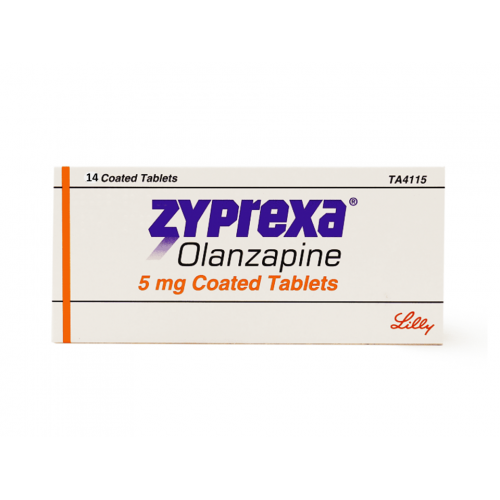
Zyprexa (olanzapine) is an atypical (second-generation) antipsychotic agent widely used in the treatment of schizophrenia, bipolar I disorder, and as adjunctive therapy in treatment-resistant depression (in fixed-dose combination with fluoxetine). It is clinically relevant because of its broad efficacy across psychotic, manic, and depressive symptom domains, balanced against a well-characterized metabolic adverse-effect profile that requires proactive monitoring.
Drug Class and Overview
Olanzapine belongs to the thienobenzodiazepine class of atypical antipsychotics. Related agents include clozapine, quetiapine, asenapine, and clozapine's structural relatives. Compared with first-generation antipsychotics, olanzapine has a higher affinity for serotonin 5-HT2A receptors relative to dopamine D2 receptors, which contributes to a lower risk of extrapyramidal symptoms (EPS) but a higher risk of metabolic disturbances (weight gain, dyslipidemia, hyperglycemia). It is available as oral tablets, orally disintegrating tablets, short-acting intramuscular injection, and a long-acting intramuscular depot formulation (Zyprexa Relprevv).
Mechanism of Action
Olanzapine is a high-affinity antagonist at dopamine D2, D3, and D4 receptors and at serotonin 5-HT2A, 5-HT2C, 5-HT3, and 5-HT6 receptors. Its clinical efficacy in psychosis is attributed primarily to D2 antagonism in the mesolimbic pathway, while 5-HT2A antagonism in the nigrostriatal pathway is thought to mitigate EPS. Additional antagonism at muscarinic (M1–M5), histamine H1, and α1-adrenergic receptors accounts for many of its adverse effects (sedation, weight gain, orthostatic hypotension). The combination product with fluoxetine (Symbyax) leverages 5-HT2C and 5-HT1A activity for antidepressant augmentation.
Indications
- Schizophrenia in adults and adolescents (≥13 years).
- Acute manic or mixed episodes associated with bipolar I disorder in adults and adolescents (≥13 years).
- Maintenance treatment of bipolar I disorder.
- Adjunctive therapy with fluoxetine for treatment-resistant major depressive disorder (Symbyax).
- Acute agitation associated with schizophrenia or bipolar I mania (intramuscular formulation).
Dosage and Administration
- Schizophrenia (adults): Initial 5–10 mg orally once daily; target dose 10 mg/day within several days; usual range 5–20 mg/day.
- Bipolar mania (adults): Initial 10–15 mg once daily; adjust by 5 mg/day at intervals ≥24 hours; usual range 5–20 mg/day.
- Bipolar maintenance: Continue at the lowest effective dose (typically 5–20 mg/day).
- Intramuscular agitation: 10 mg (range 2.5–10 mg); may repeat after 2 hours; maximum 30 mg/day and not to exceed 3 consecutive days.
- Adolescents (≥13 years): Lower starting doses are typically used (e.g., 2.5–5 mg/day); specific pediatric dosing should follow product labeling.
- Hepatic impairment: Consider lower starting dose (5 mg) and cautious titration; no formal renal adjustment is required, but caution is advised in severe renal impairment.
- Pregnancy: Use only if potential benefit justifies potential risk; neonatal EPS/withdrawal have been reported.
Pharmacokinetics
- Absorption: Well absorbed orally; peak plasma concentrations in approximately 6 hours; not affected significantly by food.
- Distribution: Approximately 93% protein-bound; large volume of distribution.
- Metabolism: Extensively metabolized in the liver, primarily via direct glucuronidation and oxidation through CYP1A2 (major) and CYP2D6 (minor).
- Elimination: Approximately 60% renal and 30% fecal; mean elimination half-life of approximately 30 hours (range 21–54 hours), supporting once-daily dosing.
- Steady state: Achieved in approximately 7–10 days of consistent dosing.
Contraindications
- Known hypersensitivity to olanzapine or any component of the formulation.
Warnings and Precautions
- Boxed Warning (Elderly with Dementia-Related Psychosis): Increased mortality (approximately 1.6- to 1.7-fold) in elderly patients with dementia-related psychosis treated with antipsychotics; olanzapine is not approved for this indication.
- Boxed Warning (Zyprexa Relprevv): Post-injection delirium/sedation syndrome (PDSS) — patients must be observed for at least 3 hours after each injection in a registered facility.
- Metabolic effects: Clinically significant weight gain, hypertriglyceridemia, hypercholesterolemia, and hyperglycemia/diabetes mellitus.
- Neuroleptic malignant syndrome (NMS): Discontinue immediately if suspected.
- Tardive dyskinesia: Risk increases with cumulative dose and duration; consider discontinuation if signs develop.
- Orthostatic hypotension and syncope due to α1-adrenergic blockade.
- Sedation and impaired psychomotor performance.
- Hyperprolactinemia (less pronounced than with typical antipsychotics).
- Seizures (use cautiously in patients with seizure history or lowered seizure threshold).
- Suicide risk in patients with schizophrenia or bipolar disorder; close supervision during high-risk periods.
Drug Interactions
- CYP1A2 inducers (e.g., carbamazepine, phenytoin, rifampin, tobacco smoking): May substantially reduce olanzapine plasma concentrations; consider dose adjustment.
- CYP1A2 inhibitors (e.g., fluvoxamine, ciprofloxacin): May increase olanzapine concentrations; consider dose reduction.
- CNS depressants (alcohol, benzodiazepines, opioids, antihistamines): Additive sedation and psychomotor impairment.
- Anticholinergic agents: Additive anticholinergic effects (constipation, urinary retention, dry mouth).
- Antihypertensives: Additive hypotensive effect, particularly with α-blockers and nitrates.
- Levodopa and dopamine agonists: Mutual antagonism; olanzapine may reduce their efficacy.
- Charcoal and activated charcoal: May reduce absorption in overdose settings.
Adverse Effects
- Common (≥5%): Somnolence, dry mouth, constipation, increased appetite, weight gain, dizziness, fatigue, dyslipidemia, hyperglycemia, akathisia, parkinsonism (less frequent than with typical antipsychotics).
- Serious/rare: Neuroleptic malignant syndrome, tardive dyskinesia, severe hyperglycemia/diabetic ketoacidosis, pancreatitis, hepatic enzyme elevation, agranulocytosis (rare), seizures, venous thromboembolism, priapism, and PDSS (with depot formulation).
Monitoring Parameters
- Metabolic: Baseline and periodic fasting glucose/HbA1c, lipid panel, weight, BMI, and waist circumference.
- Cardiovascular: Baseline and periodic blood pressure (including orthostatic measurements) and heart rate.
- Neurologic: Baseline and periodic assessment for EPS, akathisia, and tardive dyskinesia (e.g., AIMS).
- Psychiatric: Suicidal ideation, mood symptoms, and clinical response.
- Laboratory: Baseline and periodic liver function tests; prolactin if symptomatic.
- Pregnancy/neonatal: Monitor for neonatal adaptation syndrome if used in late pregnancy.
Patient Education
- Take once daily with or without food; maintain consistent timing.
- Avoid alcohol and other CNS depressants because of additive sedation.
- Rise slowly from sitting/lying positions to reduce orthostatic dizziness.
- Report excessive sleepiness, sudden fever with muscle rigidity, involuntary movements, or new/worsening diabetes symptoms (excessive thirst, urination, weight changes).
- Maintain healthy diet and regular exercise to mitigate weight gain and metabolic effects.
- Do not stop abruptly without medical guidance; discuss any pregnancy plans with the prescriber.
- For depot injection (Relprevv): arrange transportation and plan to remain at the clinic for at least 3 hours post-injection.
Clinical Pearls
- Olanzapine has the highest metabolic risk among commonly used atypical antipsychotics; baseline and follow-up metabolic monitoring is essential.
- Its long half-life (~30 hours) allows once-daily dosing and makes missed-dose recovery easier than with shorter-acting agents.
- Smoking cessation can raise olanzapine levels (loss of CYP1A2 induction); dose reduction may be needed.
- The IM formulation is highly effective for acute agitation but should not exceed 30 mg/day or 3 consecutive days due to cardiovascular and respiratory risk.
- Olanzapine-fluoxetine combination (Symbyax) is FDA-approved specifically for treatment-resistant depression and bipolar depression, not as a first-line antidepressant.
- Compared with haloperidol, olanzapine has substantially lower EPS risk but higher rates of weight gain and sedation.
References
- Eli Lilly and Company. Zyprexa (olanzapine) Prescribing Information. U.S. Food and Drug Administration.
- American Psychiatric Association. Practice Guideline for the Treatment of Patients with Schizophrenia, 2nd Edition. American Psychiatric Association.
- American Psychiatric Association. Practice Guideline for the Treatment of Patients with Bipolar Disorder, 2nd Edition. American Psychiatric Association.
- Yatham LN, et al. Canadian Network for Mood and Anxiety Treatments (CANMAT) and International Society for Bipolar Disorders (ISBD) 2018 guidelines for the management of patients with bipolar disorder. Bipolar Disorders.
- Hasan A, et al. World Federation of Societies of Biological Psychiatry (WFSBP) Guidelines for Biological Treatment of Schizophrenia. World Journal of Biological Psychiatry.
- National Institute for Health and Care Excellence (NICE). Psychosis and Schizophrenia in Adults: Prevention and Management (CG178). NICE.
- Brunton LL, Knollmann BC, eds. Goodman & Gilman's The Pharmacological Basis of Therapeutics, 14th Edition. McGraw-Hill.
- DiPiro JT, et al., eds. Pharmacotherapy: A Pathophysiologic Approach, 11th Edition. McGraw-Hill.
- Stahl SM. Stahl's Essential Psychopharmacology: Neuroscientific Basis and Practical Applications, 5th Edition. Cambridge University Press.
- Taylor DM, Barnes TRE, Young AH. The Maudsley Prescribing Guidelines in Psychiatry, 14th Edition. Wiley-Blackwell.
- Lexicomp Online. Olanzapine Drug Information. Wolters Kluwer.
- Leucht S, et al. Comparative efficacy and tolerability of 15 antipsychotic drugs in schizophrenia: a multiple-treatments meta-analysis. The Lancet.